Applications
Where lowbed trailers are used: eight industries that depend on them
Lowbed trailers rarely sit still. The same basic machine works in eight fairly different worlds, and each of them stresses a different part of the design. Understanding which world a trailer will live in is the first step in specifying it correctly.
Construction and infrastructure
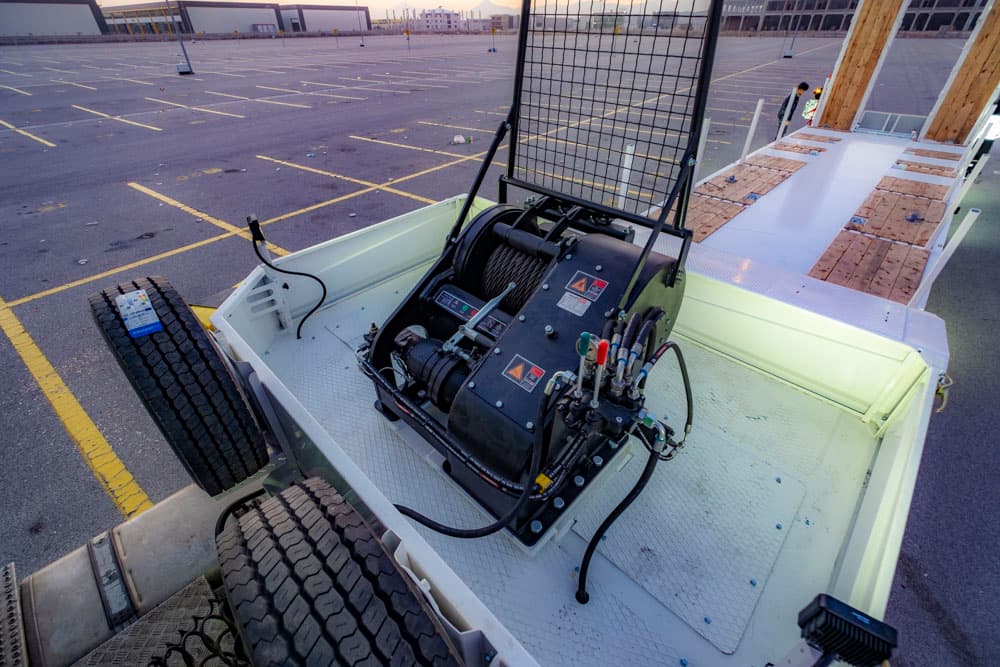
This is the volume market. Excavators, loaders, dozers, and concrete pumps move between sites constantly, often several times a week, and often onto ground that was a field a month ago.
What matters here is loading speed and manoeuvrability rather than maximum payload. Three and four axle lowbeds with hydraulic folding ramps cover the large majority of this work.
Mining and quarrying
Short routes, extreme loads, and surfaces that destroy equipment. Trailers working in pits face shock loading and abrasive dust that no highway trailer is designed for.
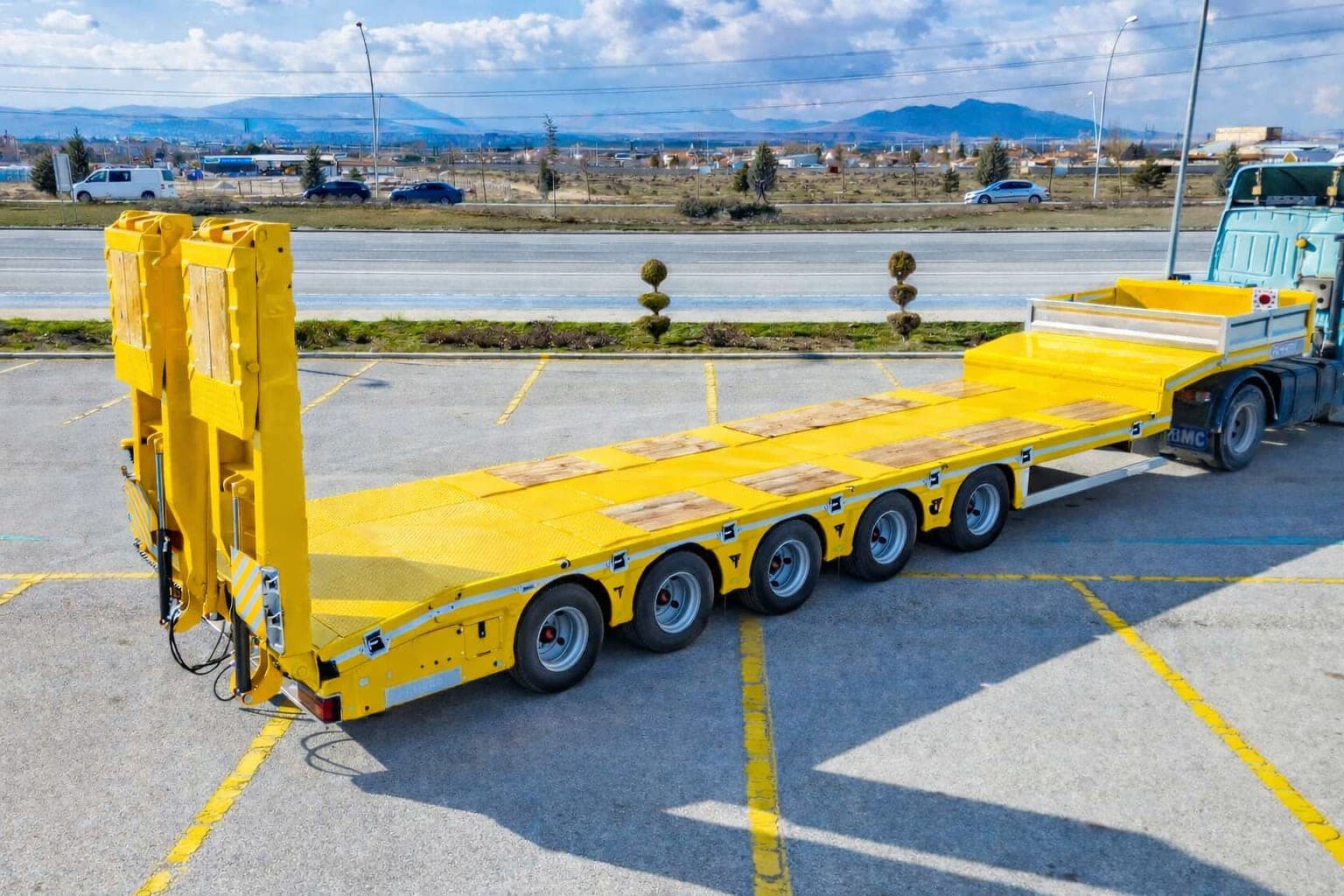
Five and six axle configurations with high-strength main beams, reinforced decks, and protected hydraulic lines are standard, and tyre and suspension choice matters as much as chassis strength.
Wind and renewable energy
Wind is where extendable lowbeds earn their reputation. Tower sections, hub assemblies, and blade components are long rather than heavy, and the last few kilometres are almost always narrow rural roads with tight radii.
Hydraulic steering on the rear axle group is what makes those corners possible. Without it, the same load either needs a longer route or does not arrive at all.
Energy, oil and gas
Transformers, pressure vessels, and generator sets are indivisible, expensive, and heavily regulated. Movements are planned months ahead around permit conditions, bridge assessments, and escort availability.
Trailers for this sector are specified from the axle-load calculation backwards, and the paperwork behind the transport matters as much as the steel underneath it.
Agriculture and forestry
Seasonal, mixed, and hard on equipment. A combine harvester in September and a stack of timber in November may travel on the same trailer, over long stretches of unsealed road.
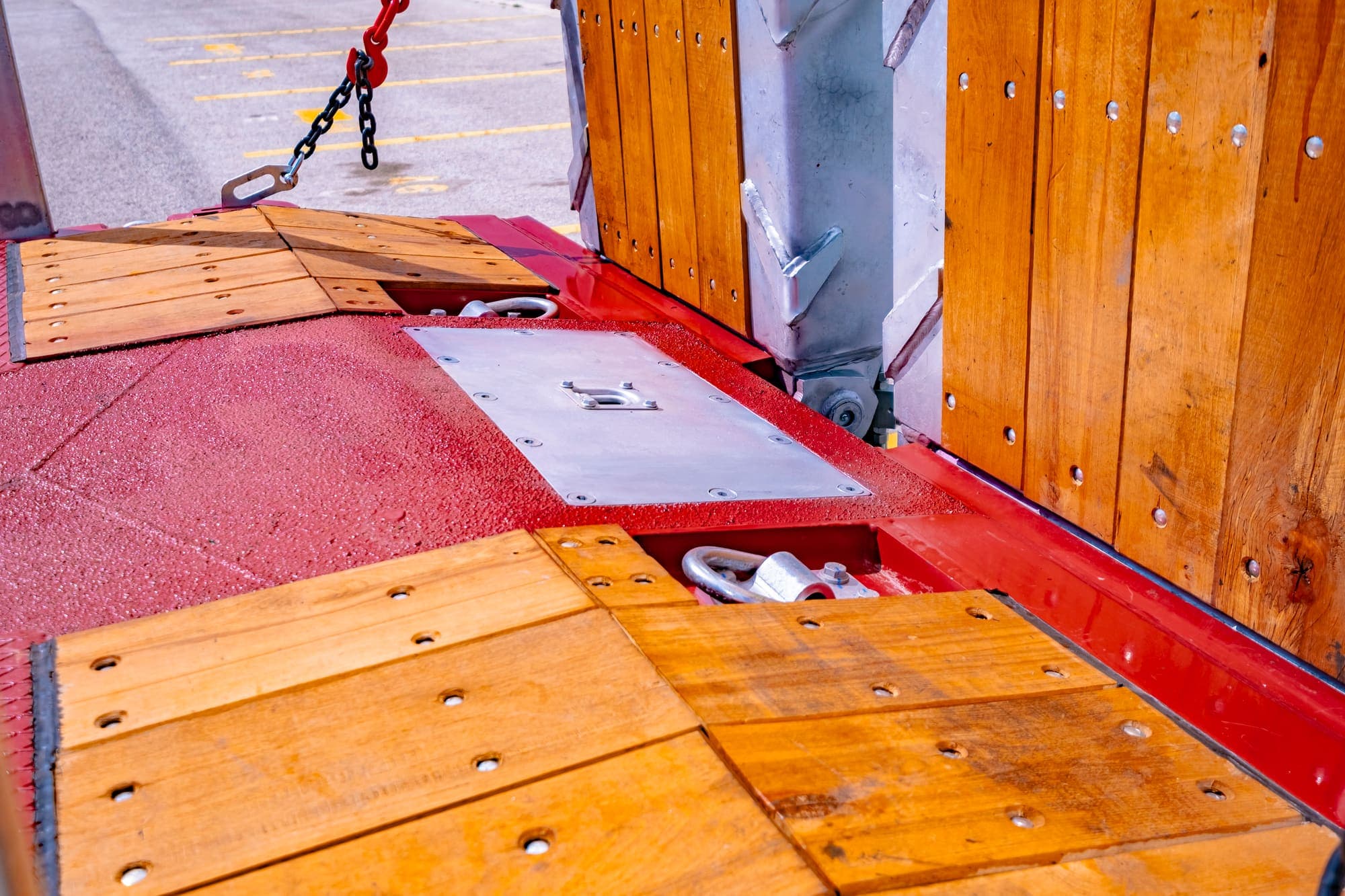
Operators in this sector value versatility: widening decks, generous lashing point coverage, and a specification that does not assume every load looks the same.
Ports, containers and intermodal
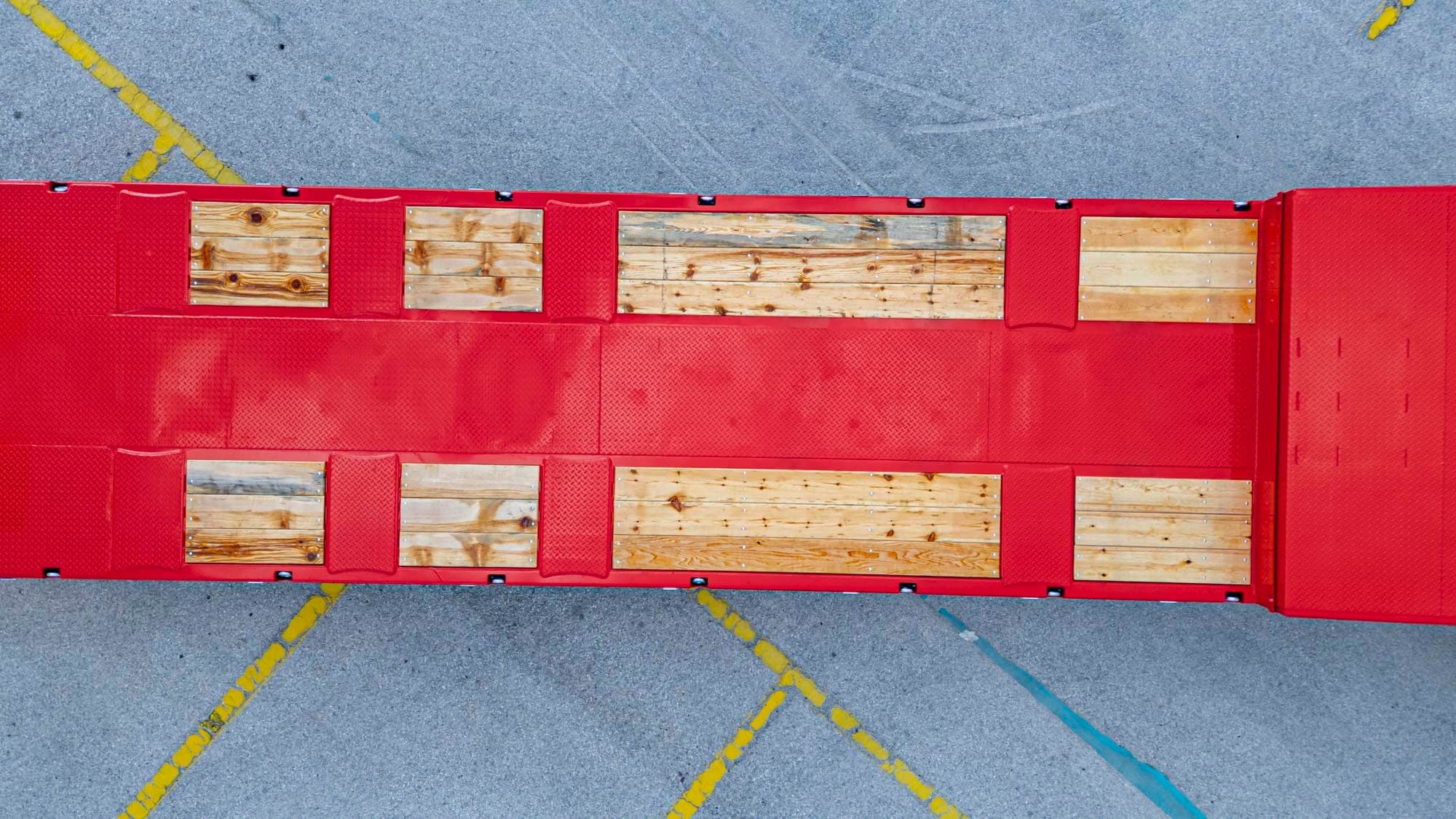
High cycle counts, tight yard geometry, and a strong preference for equipment that never causes a delay. Deck length, twist lock placement, and predictable rear overhang behaviour are the specification points that matter.
Extendable container chassis and platform trailers do most of this work, with lowbeds handling the project cargo that arrives alongside it.
Defence and public sector
Tender-driven, documentation-heavy, and generally built to a written specification rather than a catalogue page. Tracked vehicles, mobile generators, and shelter systems all need documented load plans and traceable certification.
Custom engineering is the norm here rather than the exception, and EC Type Approval is usually a hard requirement.
Heavy haulage contractors and rental fleets
These operators buy trailers that have to earn revenue across jobs nobody has described yet. Versatility, resale value, and spare-part availability outrank any single technical figure.
Four axle extendable lowbeds with a removable gooseneck and a full options package are the classic answer, because they can be quoted against almost any enquiry that comes in.