Buyers often start from a payload figure and work towards an axle count. It is worth doing it the other way around. Axles exist to keep each contact patch within a legal limit, and the limit, not the total weight, is what usually decides the configuration.
Start with the axle load limit, not the payload
Most European jurisdictions cap a single trailer axle at around 10 tonnes and treat closely spaced groups under their own combined limits. Divide the heaviest load you actually carry by that ceiling and you have your minimum axle count before any other consideration.
Add the trailer tare weight into the same calculation. It is a common and expensive mistake to size a trailer against payload alone and then discover the empty trailer has already consumed a large share of the available axle capacity.
Three axles: the site machine specialist
Up to roughly 45 tonnes. Short, light, and easy to manoeuvre on constrained sites, which makes it the default for regional movements of mid-range excavators and loaders.
This is the configuration that spends the least time waiting for permits, which is exactly why so many contractors run one.
Four axles: the general-purpose choice
Up to roughly 60 tonnes, with markedly better axle-load distribution than a three axle trailer and only a modest penalty in manoeuvrability. A self-steering rear axle keeps tyre scrub and turning circles reasonable.
If a fleet can only justify one trailer, this is usually the one that quotes successfully against the widest range of enquiries.
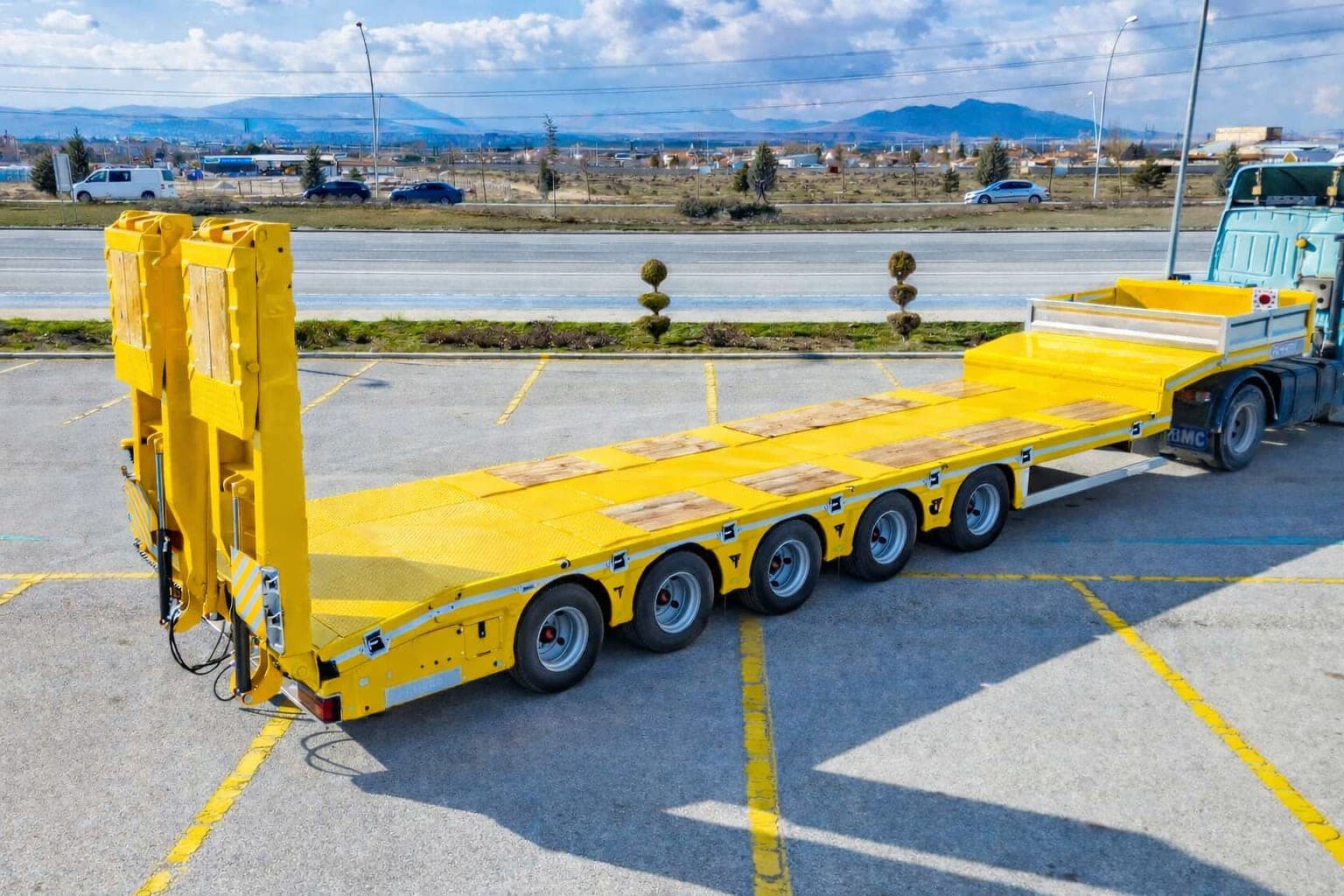
Five and six axles: heavy haulage territory
Five axles handles up to around 80 tonnes; six axles takes the combination past 100. At this level independent air suspension and multi-axle steering stop being options, because the trailer cannot be manoeuvred safely without them.
Expect route surveys, permits, and in many cases escorts as part of normal operation. The trailer is only one component of a much larger planning exercise.
Two practical rules
First, size for the heaviest load you carry more than twice a year, not for the one you carried once. Second, remember that every axle you add costs tare weight, tyres, and maintenance, so over-specifying is a real cost rather than free insurance.