Ask a fleet manager why they run lowbeds and the answer is usually one word: height. It is the right answer, but it is not the whole one. A lowbed trailer solves three problems at once, and each of them becomes a hard limit long before the trailer runs out of payload capacity.
The height problem comes first
A standard flatbed sits roughly 1.4 to 1.5 metres above the road. Add a 3.5 metre excavator and the combination is already over 4.8 metres, which is above the legal limit in most of Europe and beyond the clearance of a great many bridges and tunnels.
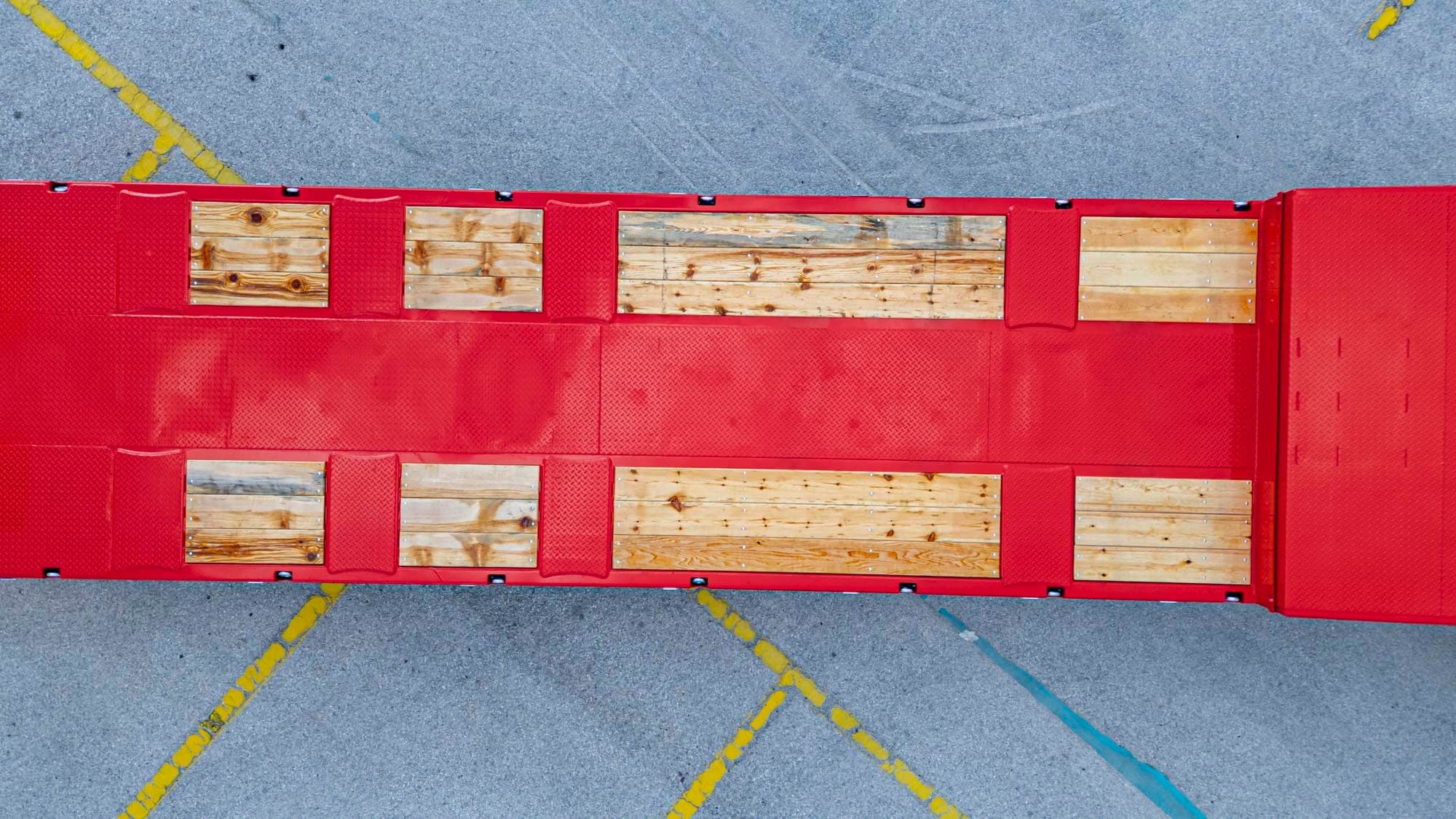
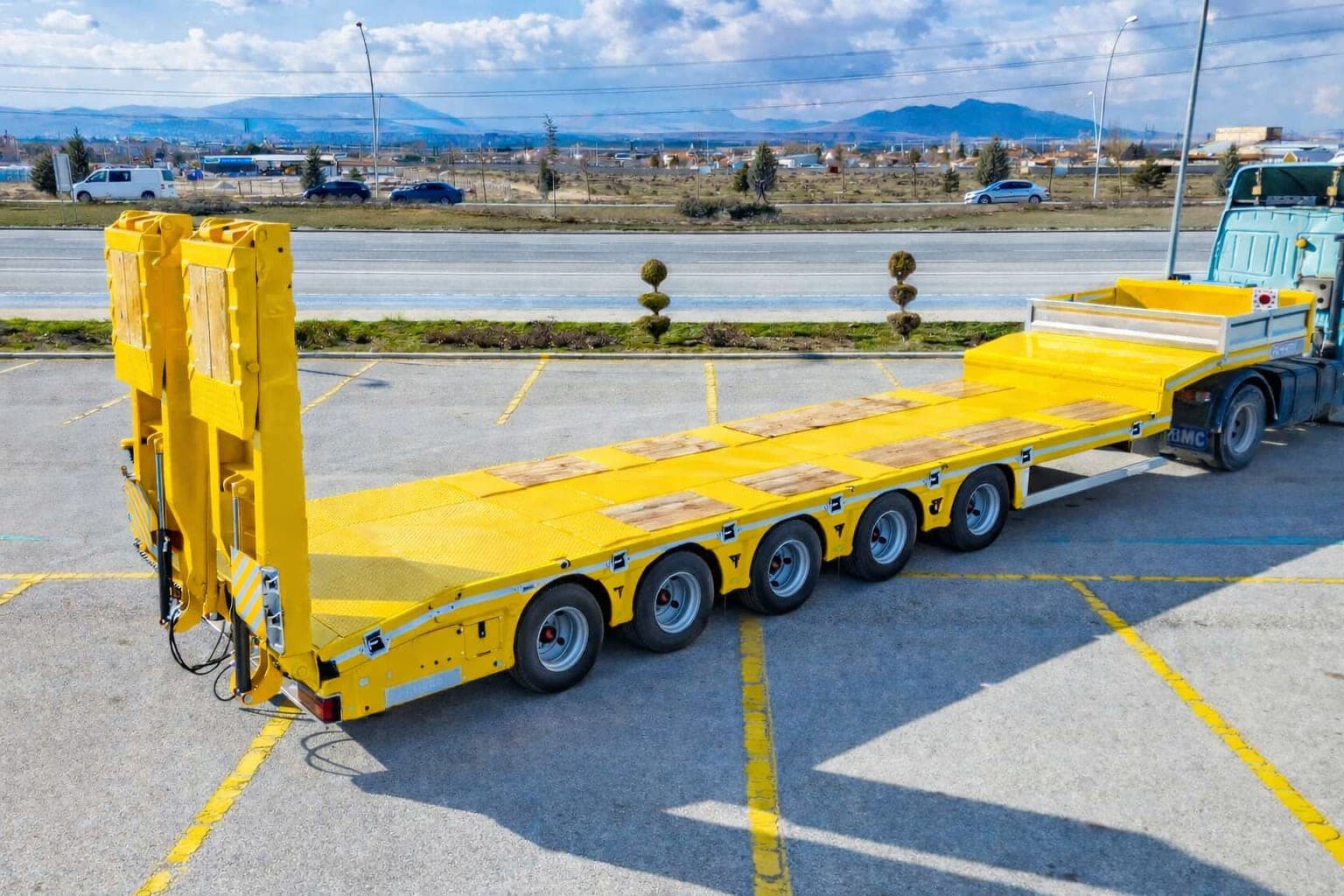
A lowbed drops the loading deck into the well between the gooseneck and the axle group, typically to 0.75 to 0.90 metres. That single change buys back around 600 millimetres of headroom, which is usually the difference between a routine transport and an escorted, permit-heavy, night-only movement.
Stability follows from the same geometry
Lowering the deck lowers the centre of gravity of the whole combination. On a roundabout, a cambered rural road, or a site track, that translates directly into less lateral load transfer and a much larger margin before the trailer starts to feel unstable.
It also changes how the load behaves under braking. A high, heavy machine on a flatbed pushes hard against its lashings under emergency braking. The same machine sitting 600 millimetres lower generates far less overturning moment, which reduces the demand on the load securing system.
Loading becomes a two-minute job, not a two-hour one
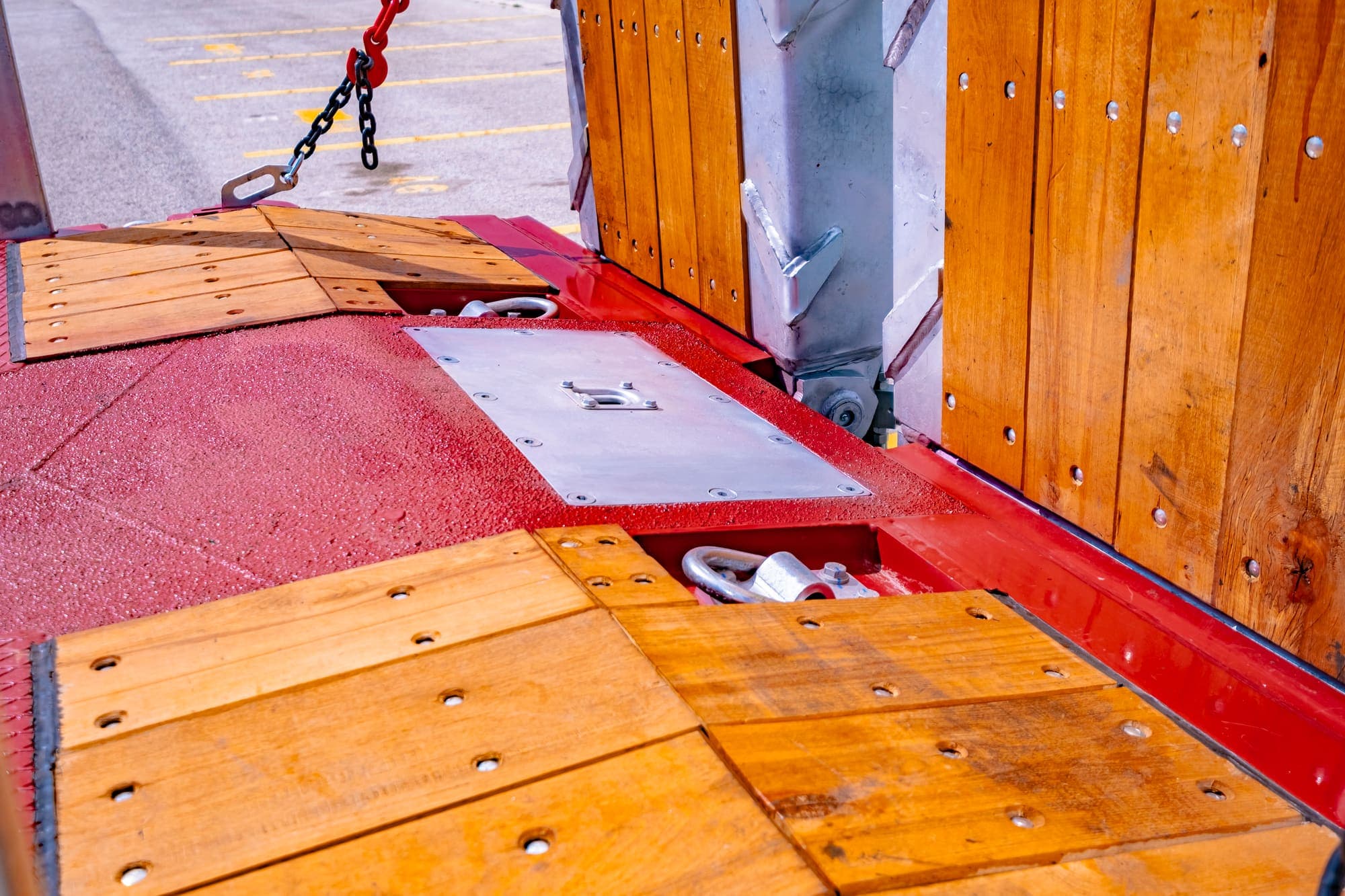
The well of a lowbed sits close enough to the ground for hydraulic ramps to reach it at an angle tracked machines can actually climb. On a standard trailer the same machine needs a bank, a loading dock, or a set of heavy portable ramps that someone has to carry, position, and secure.
For a contractor moving machines several times a week, that difference is the entire operating case. Faster loading means more moves per day with the same driver and the same tractor unit.
Axle loads decide whether the trip is legal
Payload capacity is rarely the binding constraint. Axle load limits are. Spreading the same 70 tonnes over five axles instead of three keeps each axle inside its legal ceiling, and that is what determines whether a route needs a permit at all.
This is why axle count, axle spacing, and suspension type are specified from the route survey backwards rather than from the machine weight forwards.
When a lowbed is the wrong tool
A lowbed is not automatically the right answer. Cargo that is light, tall only because it is stacked, or awkward mainly in length is often better served by an extendable flatbed or a platform trailer.
The honest test is simple: if the load height forces you above the legal envelope, or the machine has to drive on and off under its own power, you need a lowbed. If neither is true, a lighter and cheaper trailer will usually do the job with less tare weight to haul around.